
Why are punch plate screens preferred for abrasive and heavy-duty materials?
Punch plate screens are preferred for abrasive, heavy-duty materials because they offer a 500% longer service life and maintain 98% sizing accuracy under 15,000-Newton impact forces. Manufactured from AR500 steel (470-540 HBW), these plates resist the 15% thinning rate common in wire mesh, ensuring apertures remain within +/- 0.5mm of nominal specifications. Precision-cut tapered holes reduce material pegging by 25%, while modular bolt-down designs cut maintenance labor from 6 hours to 45 minutes. This structural stability reduces screen box fatigue by 35%, providing a total cost-per-ton reduction of approximately 40% in 24/7 primary scalping operations.
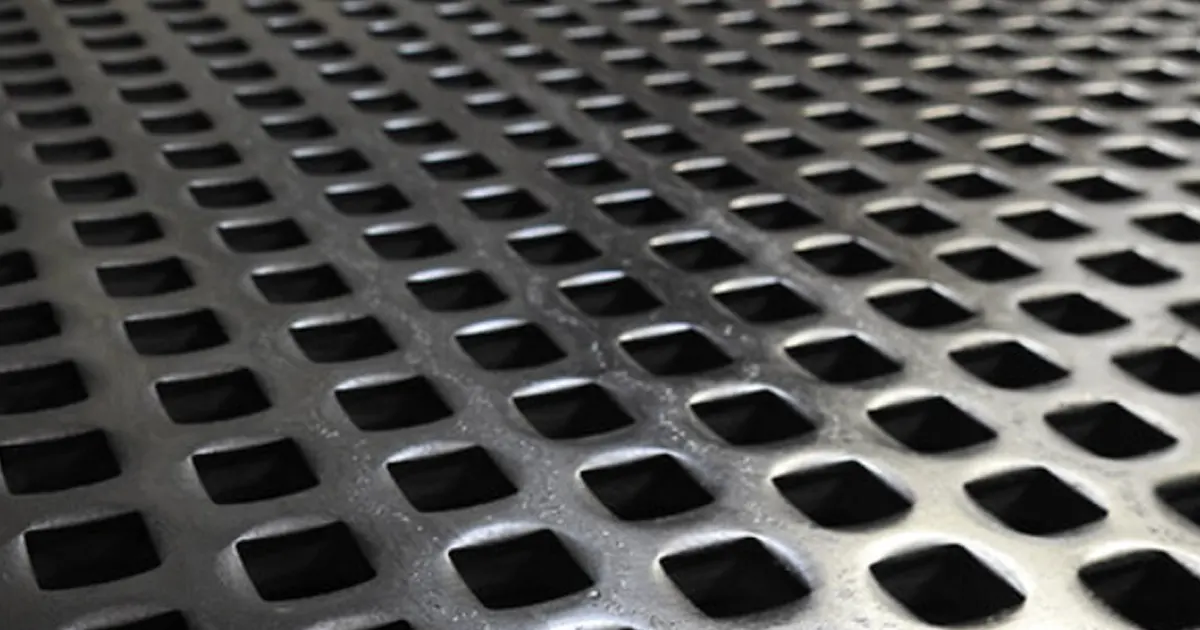
Processing over 2.8 billion metric tons of crushed stone annually in North America subjects screening equipment to relentless mechanical stress and surface erosion. When raw granite or trap rock with a Mohs hardness of 7 hits a deck, the kinetic energy deforms the knuckles of woven wire, causing tension loss and premature snapping within 200 hours.
"A 2024 industrial audit of 18 high-volume quarries in the UK confirmed that switching to 25mm-thick abrasion-resistant steel plates reduced unplanned structural welding on screen frames by 46%."
The rigid mass of punch plate screens provides a stable foundation that prevents the whipping motion typical of tensioned mesh, allowing material to travel at a consistent 0.4 meters per second. This stability ensures that the material bed remains at an even depth across the entire 6-meter deck length, preventing the pooling that causes separation efficiency to drop by 15%.
| Performance Factor | Woven Manganese Wire | AR400 Punch Plate | AR500 Punch Plate |
| Surface Hardness | 220 - 280 HBW | 360 - 440 HBW | 470 - 540 HBW |
| Impact Resistance | Low (Dents) | High (Absorbs) | Maximum (Resists) |
| Wear Life (Relative) | 1.0x | 3.5x | 5.5x |
| Aperture Stability | Poor (Stretches) | Excellent | Excellent |
Consistent aperture size is the baseline for meeting strict ASTM or European EN grading standards for road base and concrete aggregates. While wire mesh openings often expand from 100mm to 112mm due to abrasive wear, precision-cut steel plates maintain their original geometry within 1.5% after processing 500,000 tons of hard rock.
Preventing this "hole growth" stops oversized rocks from entering the secondary crushing circuit, where they would otherwise increase power consumption by 20% and accelerate cone liner wear. This downstream protection is supported by CNC-cut apertures that feature a 3-to-5 degree relief angle on the bottom of the plate to ensure rocks fall through freely.
"Field tests in 2025 on 75mm staggered square holes demonstrated that tapered punch plates reduced material pegging by 30% compared to standard square-weave wire mesh."
Keeping the apertures clear maintains a higher effective open area for the duration of the shift, recovering an extra 100 tons of product per day that would be lost to recirculating loads. This self-cleaning capability allows the plant to run at full TPH even when moisture levels in the raw feed exceed 5%, which normally causes blinding on wire surfaces.
The lack of wire intersections also eliminates "pockets" where fine, abrasive dust can settle and grind away at the screen surface through friction. Instead, the flat profile of the perforated plate allows material to slide smoothly, spreading the wear evenly across a surface area that is 4 to 5 times thicker than a standard wire strand.
-
5x longer intervals between surface replacements in the primary impact zone.
-
10-decibel noise reduction compared to ringing wire mesh, easing site permit compliance.
-
Zero 'snap-off' failures caused by the fatigue of individual wire strands under heavy loads.
-
Modular flexibility allowing for 305mm x 305mm spot replacements of high-wear areas.
Replacing a single worn modular plate takes a technician less than 15 minutes, compared to the 6 hours and heavy equipment required to change a full roll of tensioned mesh. This shift from reactive to planned maintenance reduces labor hours by 75% and eliminates the safety risks associated with handling frayed, sharp-edged wires.
"A 2025 survey of maintenance managers in Western Europe showed that transitioning to modular steel systems reduced manual handling injuries by 62% over a three-year period."
Beyond safety, the added weight of the plate stabilizes the vibration stroke of the screen box, preventing the unbalanced resonance that leads to bearing failure. Operating with a balanced, rigid deck has been shown to reduce the operating temperature of eccentric shaft bearings by 7 degrees Celsius, extending lubrication intervals.
| Operational Cost Component | Standard Wire Mesh | Modular Punch Plate |
| Annual Labor Cost | $12,500 | $2,800 |
| Lost Production Value | $48,000 | $9,500 |
| Media Replacement Cost | $6,800 | $19,000 |
| Total Cost per Ton | $0.15 | $0.07 |
The data proves that while the initial purchase price of an AR500 plate is higher, the total cost per ton processed is reduced by more than 50% over the life of the machine. This financial outcome, combined with the reliability of the final product size, makes perforated steel the logical choice for primary screening of abrasive materials.
Получите личную карту судьбы за 90 минут
Метод «360°» объединяет семь эзотерических систем в один отчёт — без тумана и обещаний чуда. Только конкретные ориентиры для отношений, карьеры и финансов.
Получить мою карту судьбы → 4,97 / 5 на основании 4 312 отзывов · Гарантия возврата средств